 HWAMDA
Thin-wall deformation
Review where and how release forces act on the cup.
MOLD SUPPLY / CONFIGURATION / MATCHING
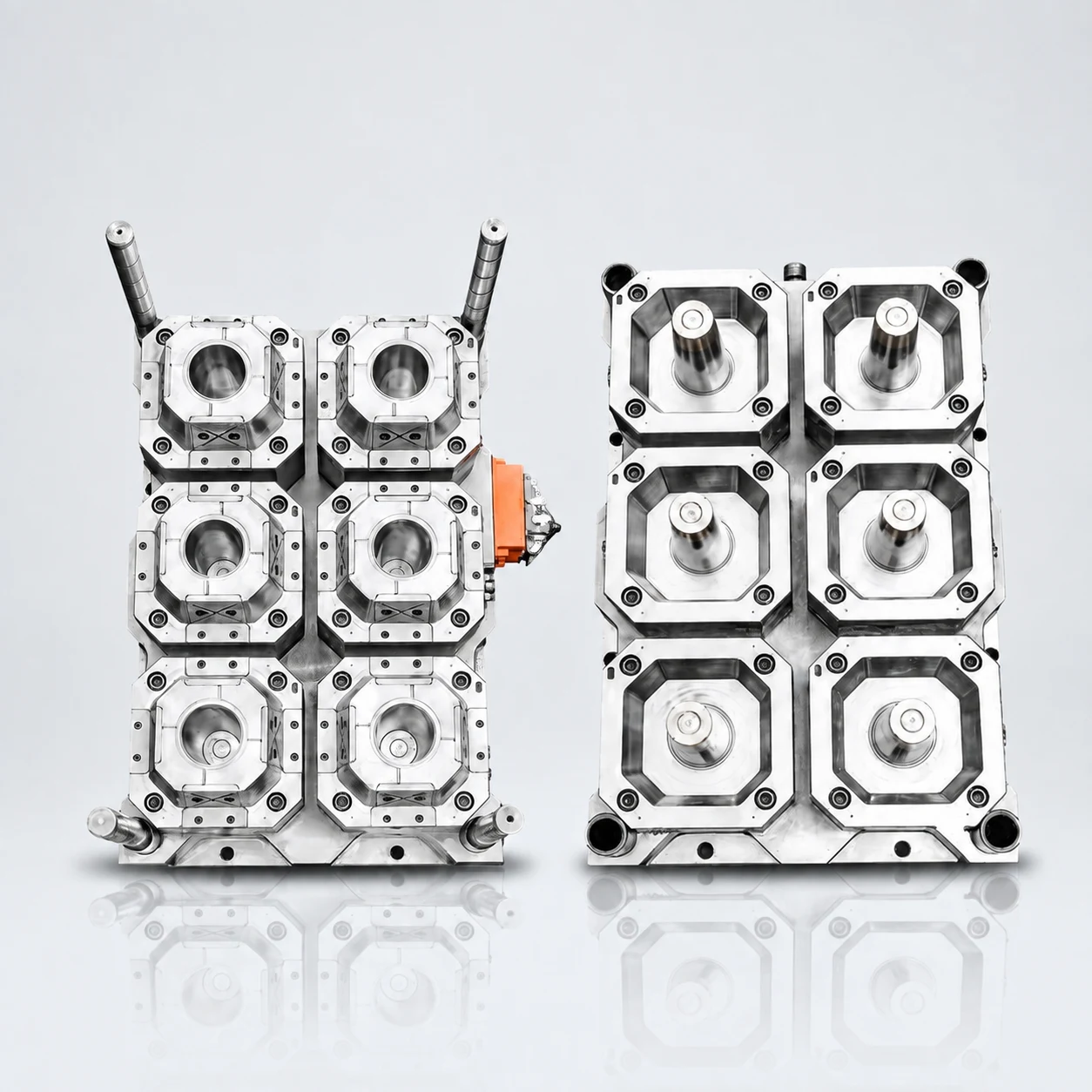
Mold supply and configuration for injection-molded plastic cups. Review cavity layout, filling, cooling, release, IML and machine compatibility around your cup.
Mold-only order? Start with your cup and existing machine.
01 / THE PRODUCT TO MOLD
Share the actual cup, not only its capacity. A sample helps define the shape, finish, lid interface and any design changes.
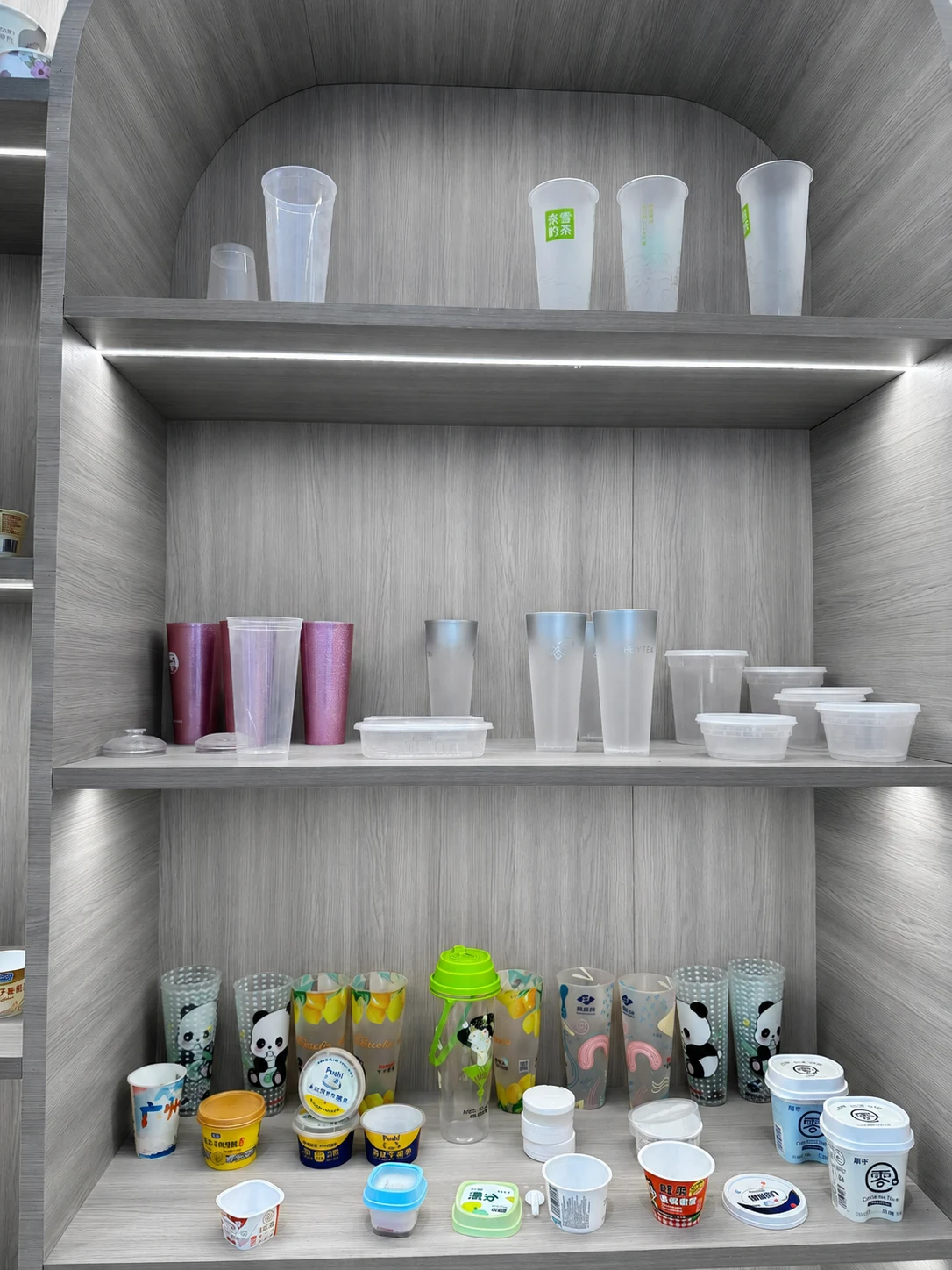
Send side, top and base photos, or a product drawing. Include the matching lid when fit or sealing must follow an existing design.
02 / PRODUCT → TOOLING
Cup capacity alone is not enough to configure an injection mold for plastic cups.
Resin grade, diameter, height, weight, wall section and bottom geometry.
Rim, existing lid, sealing surface and stack / nesting requirements.
Surface finish, label area and IML requirements if applicable.
03 / THIN-WALL FILLING
For thin-wall plastic cups, the wall section and flow length influence filling requirements. Review the machine and mold as a system.
04 / CAVITY CONFIGURATION
Work backward from your output target. Compare cavity concepts against mold space, filling, heat removal and take-out, rather than choosing more cavities by default.
05 / RUNNER & GATING
Runner and gate selection affects material flow, cavity consistency and process stability. Define the configuration around the resin, cup and cavity layout.
Evaluate the proposed runner arrangement with the complete mold design and intended machine—not as an isolated component choice.
06 / CORE & CAVITY COOLING
A fast fill does not guarantee stable short-cycle production. The core and cavity must remove heat so the cup can release consistently and hold its intended shape.
07 / EJECTION & CUP RELEASE
Review the ejection method against the cup wall, rim and base. Release stability matters as much as filling.
Review where and how release forces act on the cup.
Check release behavior and the condition of the molded sample.
Coordinate the selected release method with the take-out approach.
08 / MOLD-SIDE AUTOMATION
Check mold opening, end-of-arm tooling access, cup orientation and the required placement direction before finalizing the interfaces.
The selected machine–robot sequence determines final motion timing. Mold closing requires the robot to be clear and safety interlocks satisfied.
09 / IML CUP MOLD REVIEW
IML compatibility starts with label area and cup geometry. Review how the label is placed, retained and released with the cup.
Confirm IML suitability for the selected mold concept.
10 / CUP + LID
Provide the matching lid or drawing early. Rim geometry, material behavior and sample fit should be reviewed together.
Include any matching lid-tooling request in the quotation brief so its scope and interfaces can be reviewed.
11 / EXISTING MACHINE COMPATIBILITY
For a mold-only order, physical fit and process capability are two separate checks. Send the machine nameplate and specification sheet alongside the cup information.
12 / CHOOSE YOUR ORDER SCOPE
HWAMDA supports mold-only orders with product requirements and machine compatibility reviewed together.
For a new setup, review machine and mold together with automation, IML if needed, cooling and material handling.
Need the Complete Cup Production Cell? Explore Plastic Cup Injection Molding Solutions13 / TRIAL & SAMPLE VALIDATION
Define the sample acceptance requirements before ordering: filling result, release, cup shape, lid fit and IML appearance where applicable.
Review the mold configuration and corresponding sample against the approved product requirements.
Record the agreed trial conditions and acceptance results for the matched mold and machine configuration.
Review sample results on the intended machine or an agreed trial configuration, including the relevant cooling and handling interfaces.
14 / MOLD BUYER QUESTIONS
Send a cup photo or drawing, material, dimensions, weight and wall section if known. Include lid and IML requirements, target output and details of the intended machine. Cavity count can be evaluated during the configuration review.
Start with the required output and available production time. Compare cavity concepts against mold size, total shot, projected area, filling capability, cooling and take-out requirements. A larger cavity count is not automatically a better fit.
Review the relationship between wall section, flow length, gating, filling balance, venting and mold rigidity. Cooling, release and machine filling capability also influence whether the cup can be produced consistently.
IML suitability depends on the cup and label geometry. Review label area, placement and retention, cavity access, release and machine–robot coordination before confirming the mold configuration. IML is not assumed for every mold.
Yes, machine–mold matching can be reviewed before ordering. Send the machine brand, model, clamping and mold-space specifications, injection capacity, nozzle details and opening stroke. Final compatibility requires both physical and process review.
Yes. HWAMDA supports mold-only orders with the cup requirements and intended machine reviewed together. The quotation defines mold configuration, supply scope and sample acceptance requirements.
The machine and mold can be coordinated as a project. If you also need cooling, automation and material handling, the Plastic Cup Injection Molding Solution page covers that broader production-cell task.
Upload clear photos from the side, top and bottom, with a scale reference where possible. Provide the sample dimensions, weight, material if known, lid or mating sample, and the changes you want. Describe how a physical sample can be made available for review.
Core and cavity heat removal influences dimensional consistency and release. Uneven or insufficient cooling can limit cycle stability even when the machine can fill quickly. Review the mold and available cooling-water supply together.
Provide the actual lid or its drawing and identify the fit and sealing requirements. The rim geometry and relevant material behavior should be reviewed and the fit checked with molded samples. Include nesting or stacking requirements in the product brief.
15 / YOUR MOLD REQUEST
Start with the cup you need to mold. Upload a photo, product or lid drawing, or the existing machine nameplate. Add engineering details if you have them.
You do not need to select a cavity count before contacting us.