 HWAMDA
Repeatability
Coordinate injection, clamp, ejector and robot movements consistently.
IML AUTOMATION SOLUTION
Configure the injection molding machine, mold interface, label handling and robot sequence as one synchronized IML production cell.
Machine · mold · label · robot · automation
SYSTEM FIT
IML is not a machine accessory added at the end. Each stage must be engineered around the molded part, label, mold and required handling sequence.
MACHINE REQUIREMENTS
The machine must support the real filling requirement and exchange stable signals with the robot. Selection starts with the part and mold rather than an unsupported speed claim.
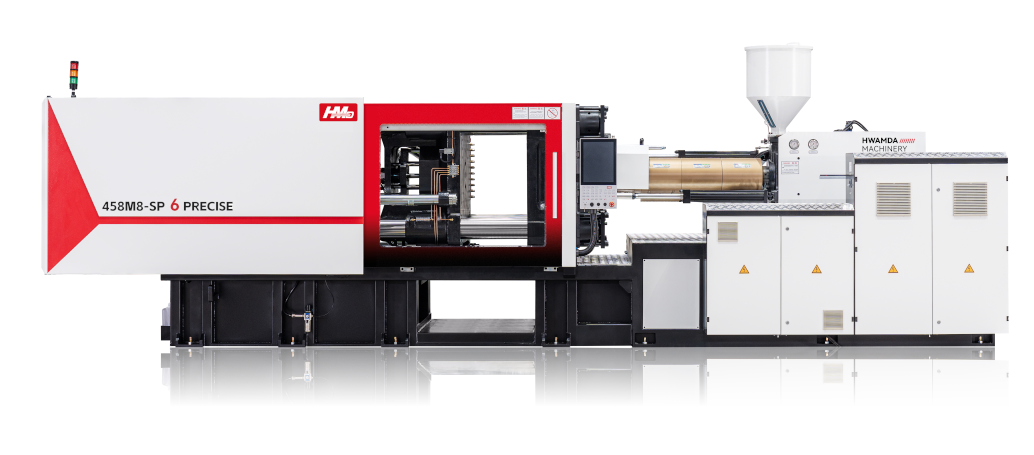
Coordinate injection, clamp, ejector and robot movements consistently.
Review the filling profile and machine response required by the part.
Validate filling, cooling, mold movement and take-out as one sequence.
Confirm the signal, safety and control interfaces before integration.
Use a high-speed configuration only when the part, mold and cycle justify it.
ROBOT & LABEL HANDLING
Robot selection depends on mold access, label geometry, cavity layout, part removal and the time available inside the cycle.
Collect each label from the feeding position.
Orient the label for the correct cavity and direction.
Enter the open mold with the required clearance.
Exchange ready, safe and completion signals with the machine.
Take out the molded products and transfer them downstream.
MOLD REQUIREMENTS
An IML mold must be reviewed together with the robot and machine. The interface cannot be confirmed from the product name alone.
Check dimensions, weight, platen fit, ejector, cooling and controls.
Reserve safe robot entry and label-placement clearance.
Define the position, signals and sequence shared with the automation.
Match labels, pickup tooling, filling balance and part take-out.
Confirm shot requirement, clamp, opening stroke and cycle sequence.
HWAMDA coordinates machine–mold interface data and production trials around the confirmed IML project requirements.
LABEL FEEDING & POSITIONING
The feeding method must suit the real label. Stable presentation helps the robot repeat the same pickup and insertion path.
Present labels consistently without damaging their shape.
Maintain the required orientation for each mold cavity.
Keep pickup and insertion positions inside the validated process window.
Release the next label only when the robot and machine sequence is ready.
FULL AUTOMATION SEQUENCE
The complete sequence makes hidden interfaces visible before equipment is finalized.
SUITABLE APPLICATIONS
Application fit depends on product geometry, label design, material, mold and commercial requirements—not on appearance alone.
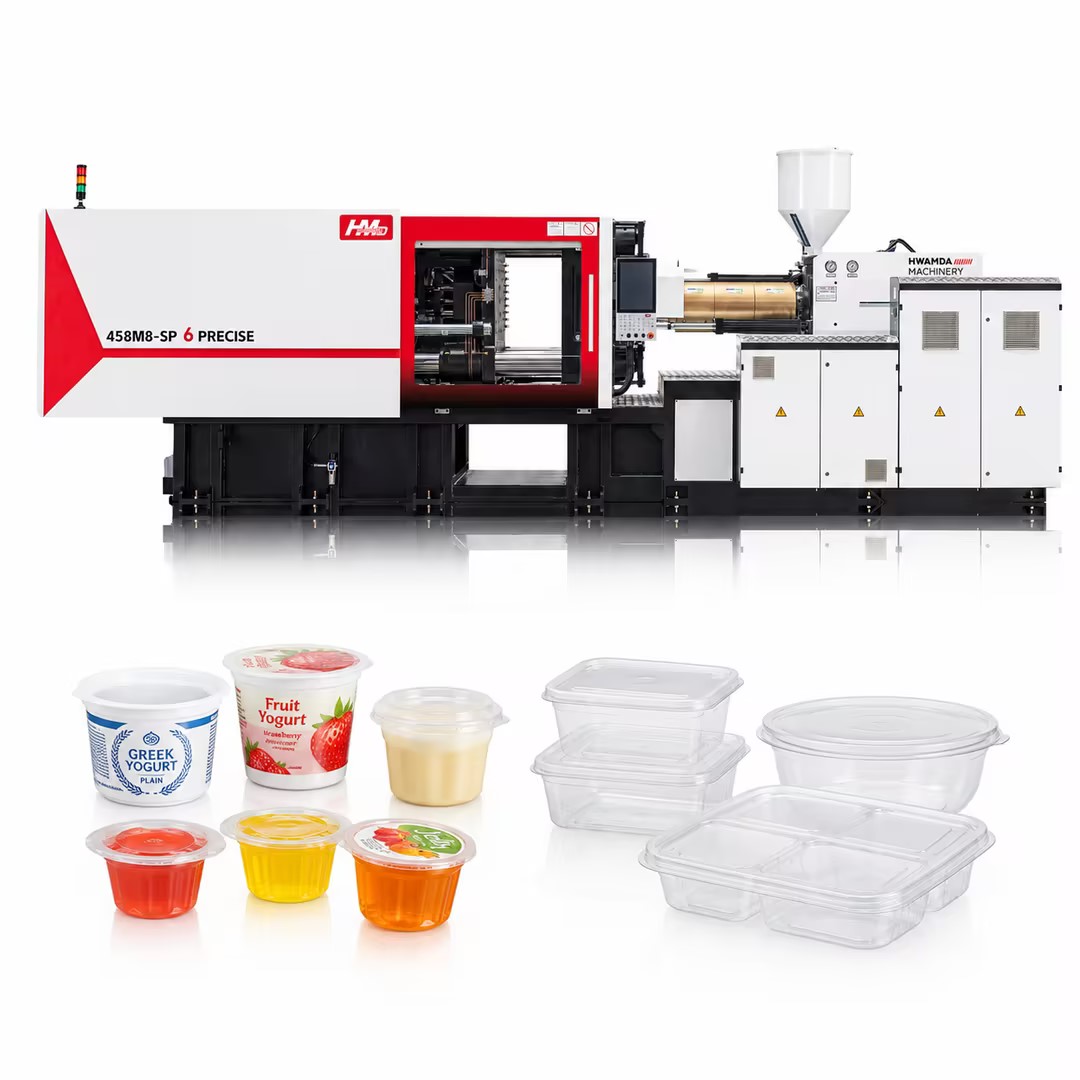
Containers and lids where integrated decoration is part of the project.
Cup and portion-pack projects with defined label and stacking needs.
Rigid packaging formats with compatible mold access.
Light parts requiring precise placement and removal.
Larger labeled parts reviewed for robot reach and mold sequence.
Other parts evaluated from drawings, labels and production targets.
CYCLE & SYNCHRONIZATION
Final performance comes from the coordinated production window rather than a generic IML cycle promise.
Synchronized IML cycle
Cycle planning must include label pickup, insertion, mold movement, injection, cooling, part removal and quality checks. No fixed cycle is published without a real project trial.
RISK REDUCTION
Most IML problems are system problems. Product, label, mold, robot and timing should be diagnosed together.
Review static control, pickup, placement and mold-close timing.
Check label orientation, tooling location and robot repeatability.
Confirm label separation, surface condition and pickup method.
Verify machine, robot and safety signals across the complete sequence.
Check part release, robot clearance and downstream transfer.
Identify which connected step is limiting cycle stability.
PROJECT VALIDATION
Useful evidence shows the configured machine, label pickup, mold entry, injection, part removal and finished-product inspection. Unrelated footage is not used as project proof.
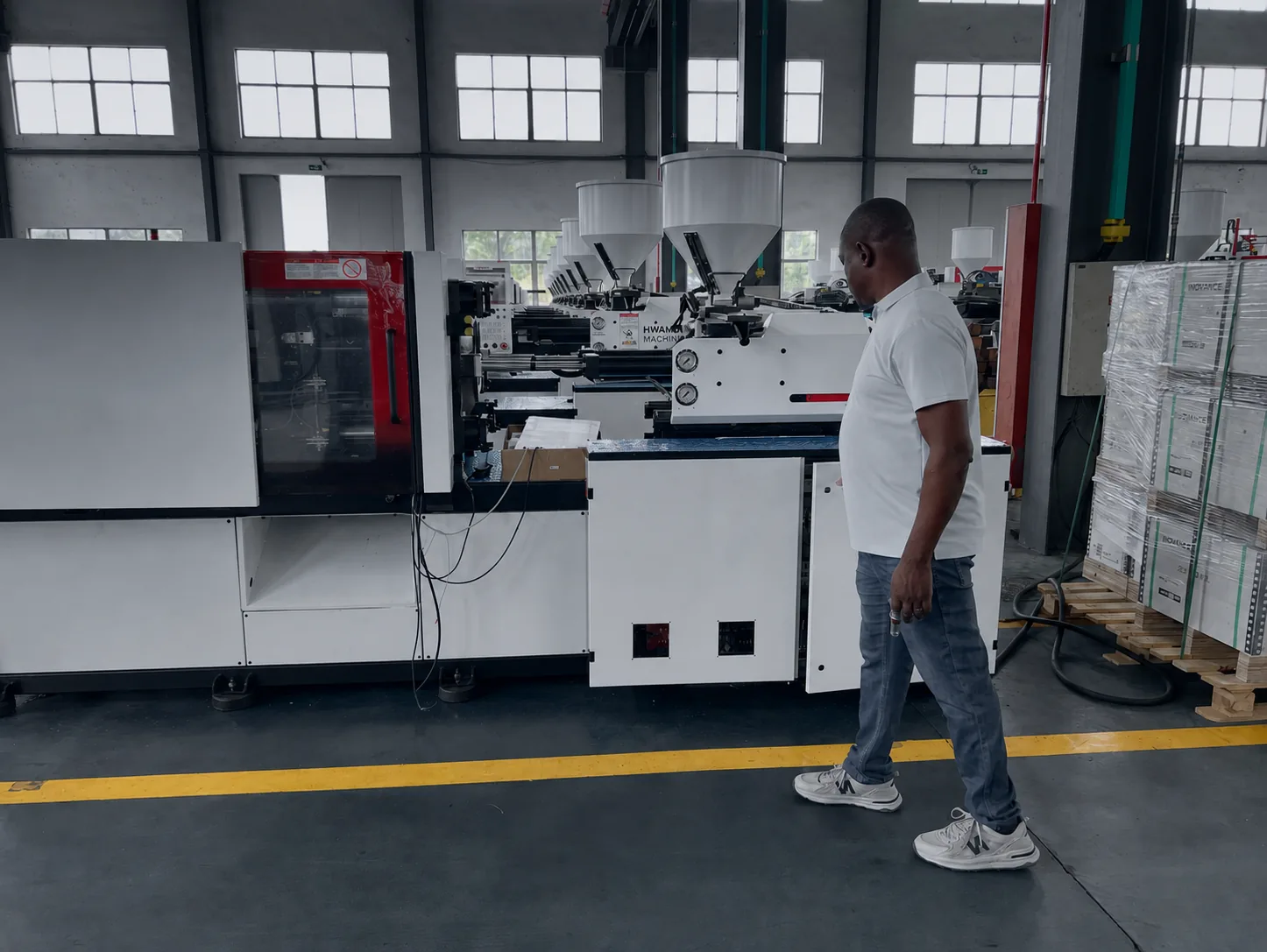
Required future footage: label feeding, robot pickup, mold insertion, machine cycle, part removal and close-up inspection of the finished IML product.
PROJECT INPUTS
Send the information already available. Unknown items can be confirmed during engineering review before the final cell is configured.
Product drawing
Material and grade
Product weight
Overall dimensions
Desired cavity count
Target output
Label drawing and specification
Existing or new mold information
Required take-out and downstream automation
BUYER QUESTIONS
Practical answers for preparing an automated IML project.
It is an injection molding machine configured to synchronize with label feeding, an IML robot, the mold and part take-out as one production sequence.
The scope normally reviews the machine, mold, labels, feeder, robot, pickup tooling, controls, take-out and any required downstream equipment.
Yes, when the product, label, mold access, robot sequence, filling and cooling are validated together.
Robot selection depends on label size and shape, cavity layout, mold access, reach, payload, pickup tooling and cycle sequence.
The mold must support label placement and the robot sequence. Whether an existing mold can be adapted requires an interface review.
Label pickup, insertion, machine signals and part removal become part of the full cycle and must be synchronized with filling and cooling.
Potentially, after checking machine controls, safety signals, mold access, opening stroke, cycle stability and the required robot interfaces.
Send the product and label drawings, material, weight, dimensions, cavities, output target, mold status and automation requirements.