 HWAMDA
Plastic cups
Start with cup geometry, rim, weight and wall section.
Explore the cup production solutionHWAMDA SP6 SERIES
High-speed injection molding systems configured around the filling, response, mold, cooling and automation requirements of thin-wall packaging.
A flagship specialist line within HWAMDA’s injection molding machine range.
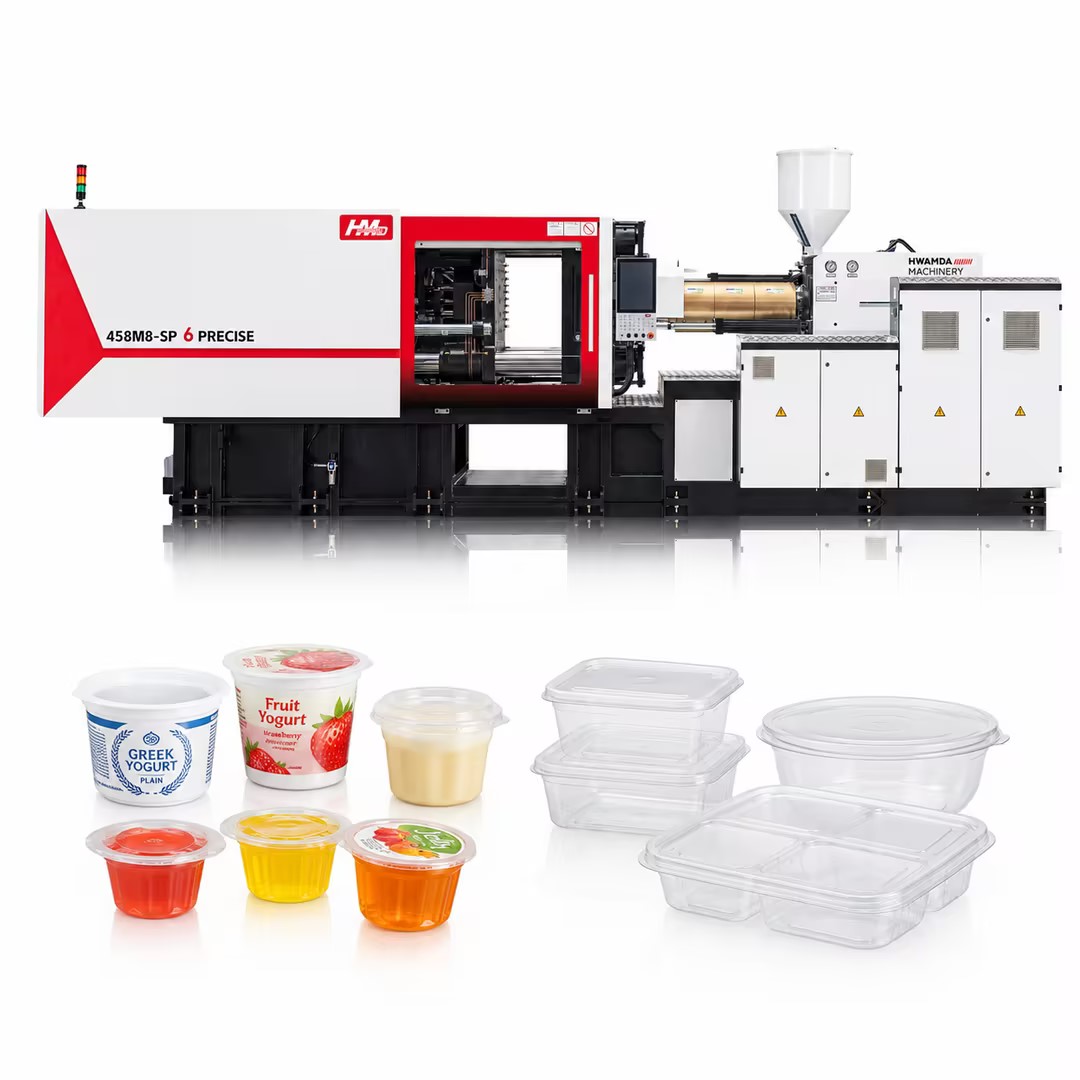
THE FILLING WINDOW
Wall section, flow length, resin and cavity layout determine how demanding filling becomes. A higher output target also requires cooling and part handling to keep pace.
Review these relationships together. There is no single wall-thickness threshold or injection-speed setting that fits every product.
Understand the thin-wall molding processPRODUCT FAMILIES
Cups, thin-wall boxes and tubs place different demands on filling and release. IML adds label placement to the selected product’s production sequence.
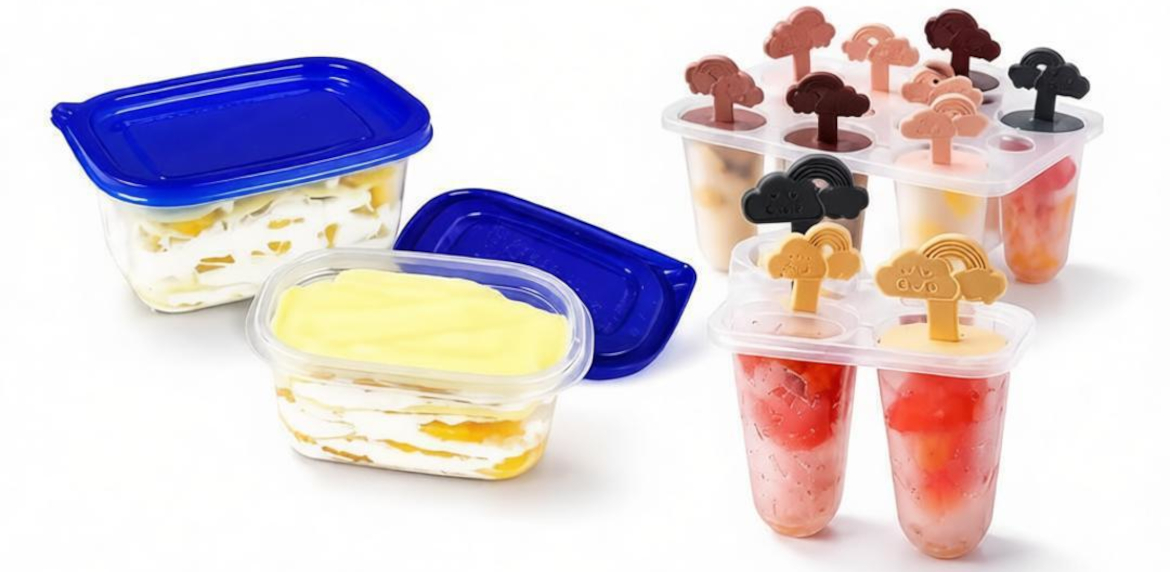
Start with cup geometry, rim, weight and wall section.
Explore the cup production solutionReview boxes, round or rectangular containers and related lids.
Explore container productionCoordinate the machine with label placement and molded-part take-out.
Explore the IML solutionPRODUCT-LED SELECTION
Send the information you have. Product and mold requirements guide the clamping, injection and automation configuration.
MACHINE PERFORMANCE
Compare the SP6 injection options below, then review response, motion and recovery against the proposed mold and process.
Match screw diameter, shot volume and pressure as one configuration. Injection speed is shown for each option, not as a universal production guarantee.
Review the required filling profile, pressure control and repeatability with the resin and flow path.
Check projected area, mold envelope, opening stroke and the space needed for part removal.
Review shot recovery and material preparation against the cycle target. Confirm the servo/hydraulic and power configuration in the machine proposal.
SP6 MODEL RANGE
Select a model to review its mold envelope and paired injection specifications. Configuration depends on the product, mold and target output.
Each row is one screw configuration. Injection weight and speed use the PS reference; actual resin and process requirements must be matched.
| Screw Ø (mm) | Volume (cm³) | Weight, PS (g) | Pressure (MPa) | Speed, PS (mm/s) |
|---|---|---|---|---|
| 50 | 530 | 482 | 177 | 419 |
| 53 | 595 | 541 | 158 | 419 |
Each row is one screw configuration. Injection weight and speed use the PS reference; actual resin and process requirements must be matched.
| Screw Ø (mm) | Volume (cm³) | Weight, PS (g) | Pressure (MPa) | Speed, PS (mm/s) |
|---|---|---|---|---|
| 55 | 475 | 432 | 182 | 523 |
| 57 | 510 | 465 | 169 | 523 |
Each row is one screw configuration. Injection weight and speed use the PS reference; actual resin and process requirements must be matched.
| Screw Ø (mm) | Volume (cm³) | Weight, PS (g) | Pressure (MPa) | Speed, PS (mm/s) |
|---|---|---|---|---|
| 55 | 475 | 432 | 182 | 588 |
| 57 | 510 | 465 | 169 | 588 |
Each row is one screw configuration. Injection weight and speed use the PS reference; actual resin and process requirements must be matched.
| Screw Ø (mm) | Volume (cm³) | Weight, PS (g) | Pressure (MPa) | Speed, PS (mm/s) |
|---|---|---|---|---|
| 65 | 929 | 845 | 180 | 557 |
| 67 | 987 | 898 | 169 | 557 |
On smaller screens, swipe the option table horizontally. A larger shot option does not necessarily provide a higher injection pressure.
MACHINE–MOLD MATCHING
Review the machine and thin-wall mold together. Filling balance, cooling and part release must support the intended production cycle.
Mold dimensions, weight, mounting and projected area
Cavity count, total shot, runners, gates and filling requirement
Cooling circuits, venting and ejection
Robot access, take-out clearance and IML interfaces
Sourcing a container mold? Review thin-wall container tooling
Sourcing a cup mold? Review cup tooling and machine matching
CYCLE & OUTPUT
Geometry, material, wall thickness, cavity balance and machine settings affect the quality window. Validate the full production sequence rather than promising a universal cycle.
Some operations can overlap where the equipment and safe sequence allow. Robot or IML timing and plasticizing recovery must fit the complete cycle. Planning output also allows for quality checks and normal stops.
IML INTEGRATION
Review mold opening, machine–robot signals and repeatable positioning with the IML sequence. Agree the interfaces before finalizing the machine configuration.
Take-out must keep pace with the molding cycle while maintaining safe access to the mold area.
Machine speed cannot remove a cooling bottleneck. Match mold heat removal and coolant conditions to the part’s release requirement. Chillers remove heat; mold temperature controllers regulate the process temperature. The project determines which equipment is needed.
Review auxiliary equipment configurationCOMPLETE PRODUCTION CELL
HWAMDA coordinates machine selection, mold matching, automation and auxiliaries around the product and production target.
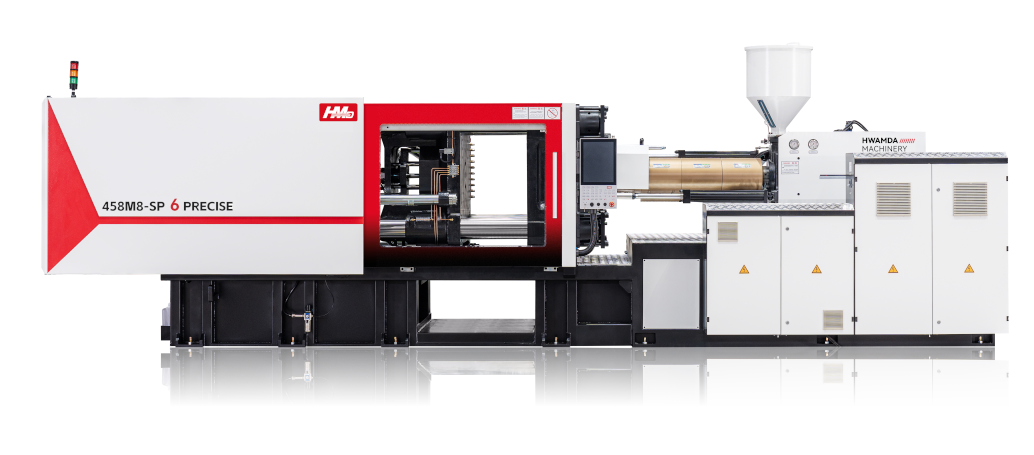 SP6 machine + thin-wall mold
HIGH-SPEED VS STANDARD
Not every molded product requires a high-speed machine. Compare the filling window and complete production requirement before selecting a machine family.
| Requirement | High-speed review | Standard-machine review |
|---|---|---|
| Filling & response | Demanding thin-section filling profile | Filling profile within the proposed machine’s capability |
| Mold & cooling | Balance filling and release with the short-cycle target | Match the mold and cooling to the required production rate |
| Automation | Coordinate handling or IML with the full cycle | Select handling according to the actual part and output task |
PRODUCT & TRIAL REVIEW
A useful production review follows mold movement, part take-out and finished-part quality together. Discuss the product and acceptance requirements for your configuration.
PRODUCTION TRIAL REVIEW
Review the machine, mold movement, take-out and finished-part quality under the agreed trial conditions.
BUYER QUESTIONS
Selection depends on the filling window, machine response, plasticizing recovery and coordinated mold movements. A standard machine can be the right choice when it meets the product and production requirements.
A thin flow section can leave less time to fill the cavity before the melt cools. The machine must establish and control the required filling profile with the chosen material and mold.
Review them together with resin grade, gate location and cavity geometry. A longer flow path through a thin section can increase filling demands; wall thickness alone does not define a machine size.
More cavities change the total shot requirement, projected area, filling balance, cooling load and handling task. Review the complete mold rather than assigning a model from cavity count alone.
Check mold dimensions and mounting, projected area, filling balance, runners and gates, cooling, venting, ejection and robot access. Physical fit alone is not enough.
Material, part geometry, filling and holding, cooling, mold movement, ejection and robot or IML timing work together. Validate the complete cycle against part quality rather than using one universal cycle figure.
HWAMDA can review machine signals, mold opening, label placement and take-out timing with the IML configuration. The agreed interfaces and sequence are checked for the project.
Send the mold drawing, dimensions, weight, cavity and injection requirements, cooling connections and ejector details. The review covers both installation fit and production requirements.
Start with a product photo or drawing, material if known, dimensions, weight, wall thickness and target output. Include available mold and automation details; you do not need to know the machine tonnage.
Machine size, injection configuration, mold interfaces, controls, automation and auxiliary scope affect the quotation. Send your product requirements so the proposed machine and included equipment can be compared on the same basis.
SEND YOUR PRODUCT
Start with your product and contact details. Add a photo or drawing if available. You do not need to choose a tonnage before asking.
Product dimensions, weight and wall thickness, if known
Existing or new mold; cavities and mold dimensions
Target output, IML and automation requirements